- Year
- 2014–16
- Research direction
- Archives as Living Sites →
- Role
- Research · Platform · Publication
- Team
- Fan Xiang · Shunshan Zhu · Ying He
- Source
- National Exhibition of Fine Arts catalogues · Tsinghua University Library · National Library of China
- Includes
- Interactive platform · Video · Paper · Talk
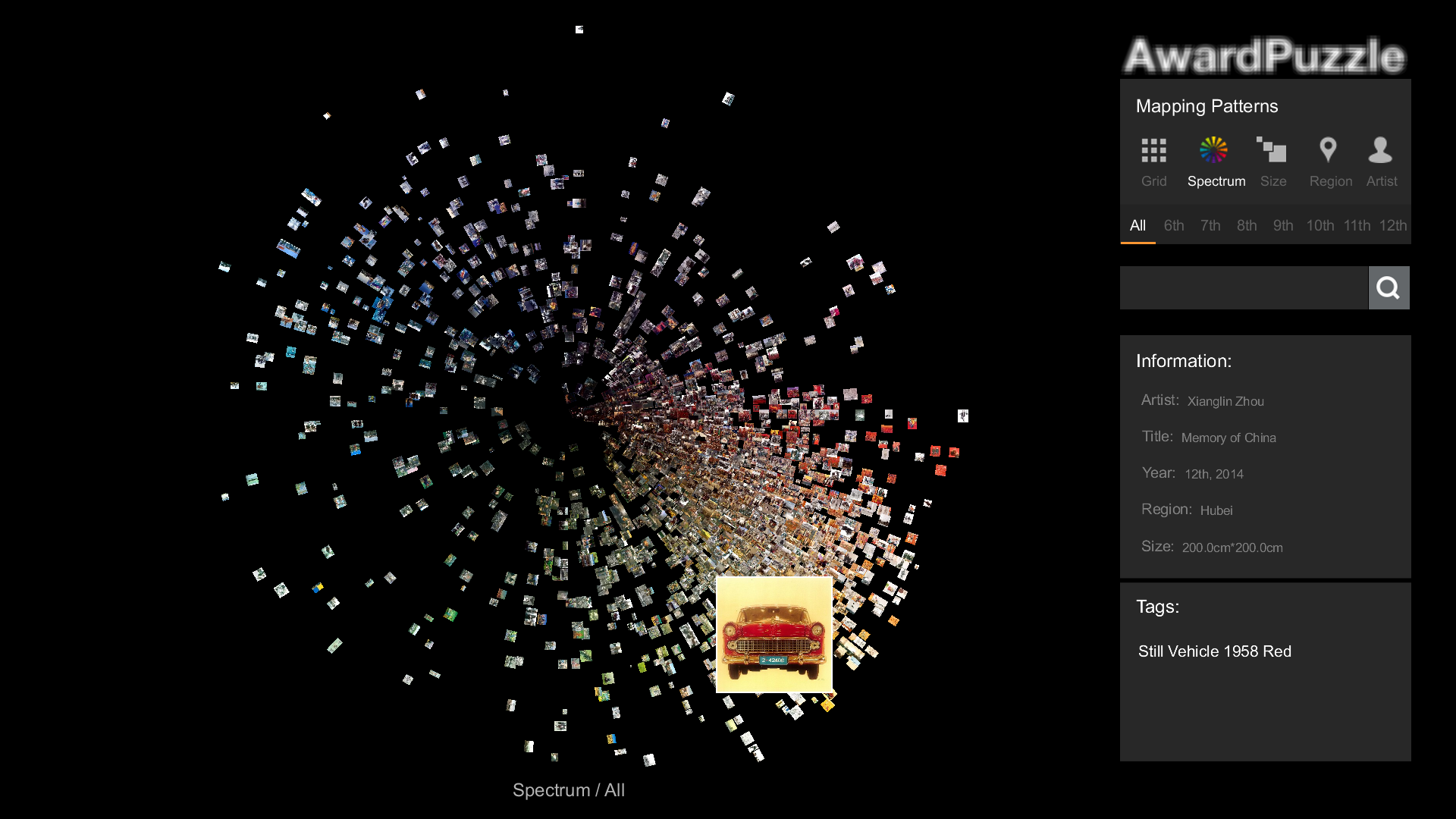
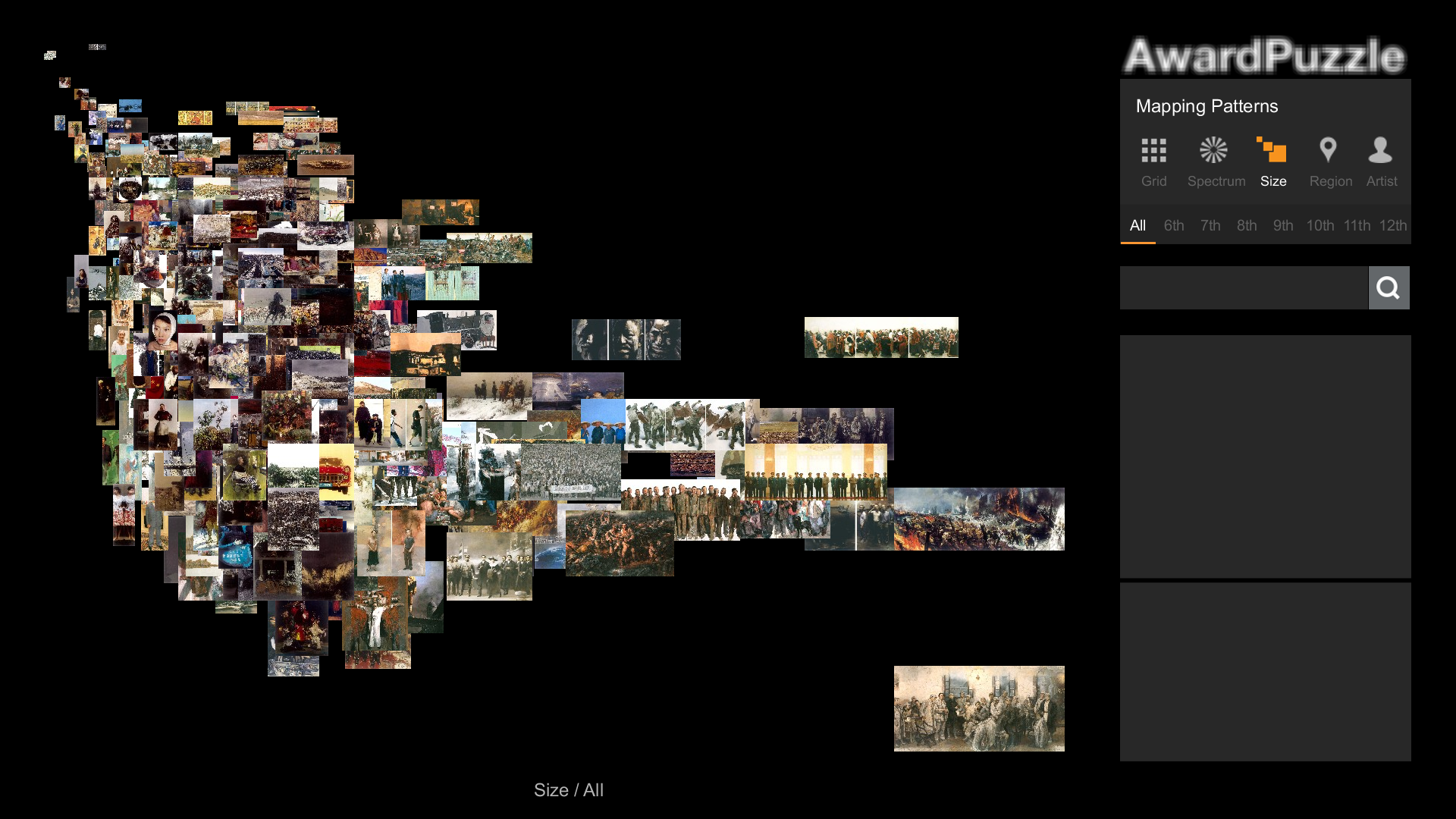
AwardPuzzle is an interactive visualization platform for exploring commonalities, trends, and differences among 2,276 prize-winning oil paintings from seven editions of China’s National Exhibition of Fine Arts. It lets the public compare thirty years of works without reducing the paintings to abstract marks.
Original project record
View archived page ↗- Interactive public platform released in May 2016 after the first research report circulated in January 2015.
- Data collection: Wenshi Luo · Xinyan Huang · Bo Jin · Manhua Zhang · Pingyun Liu. Image preprocessing: Shulun Ye · Haoji Lin · Yu Zhang.
- Longlisted for the Kantar Information is Beautiful Awards 2016 in Interactive Visualization.
From dispute to evidence
The National Exhibition of Fine Arts is presented as a survey of the country’s highest artistic achievement, yet critics have questioned recurring subjects, colors, and compositions. AwardPuzzle asks how these impressions can be examined when no individual can remember and compare thousands of paintings across thirty years.
Building a comparable image archive
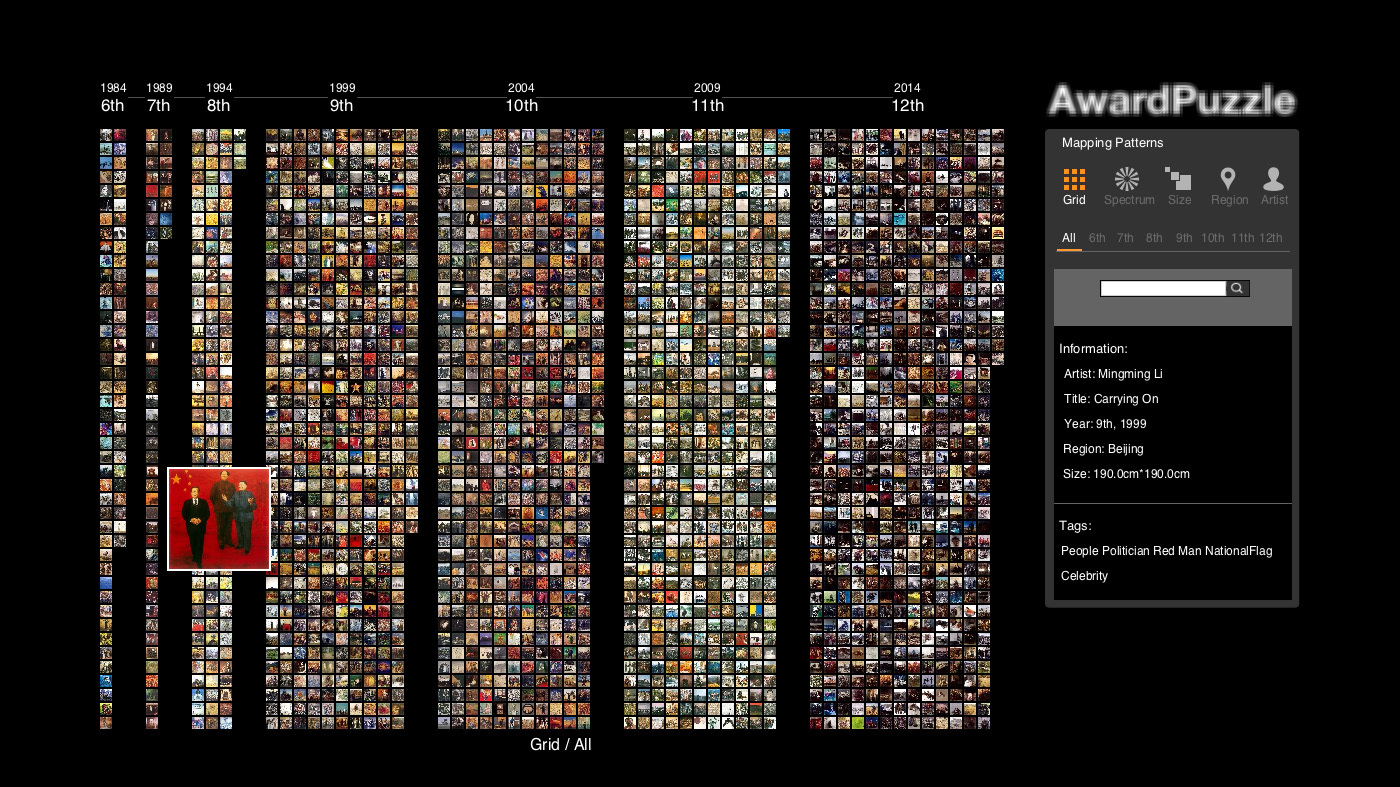
The organizers did not provide a complete online record. The team collected and scanned catalogues covering seven exhibitions from 1984 to 2014, then structured each work by artist, title, region, year, dimensions, color values, and manually assigned visual tags.
Keeping the paintings visible
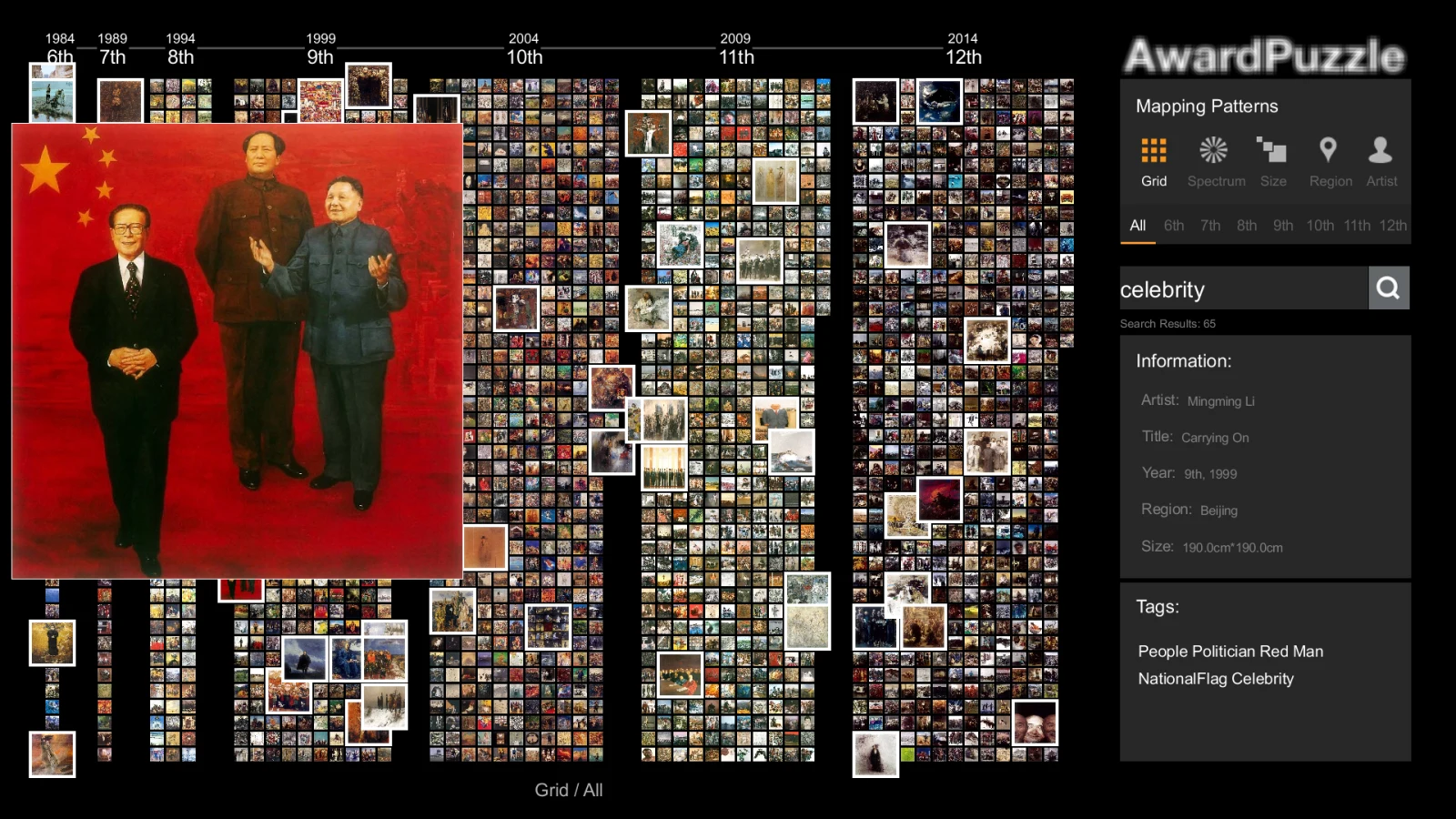
Instead of replacing paintings with bars or dots, the interface uses each image as its own data mark. This direct visualization keeps the research object visible while allowing more than two thousand images to be observed as one field.
Five ways to compare
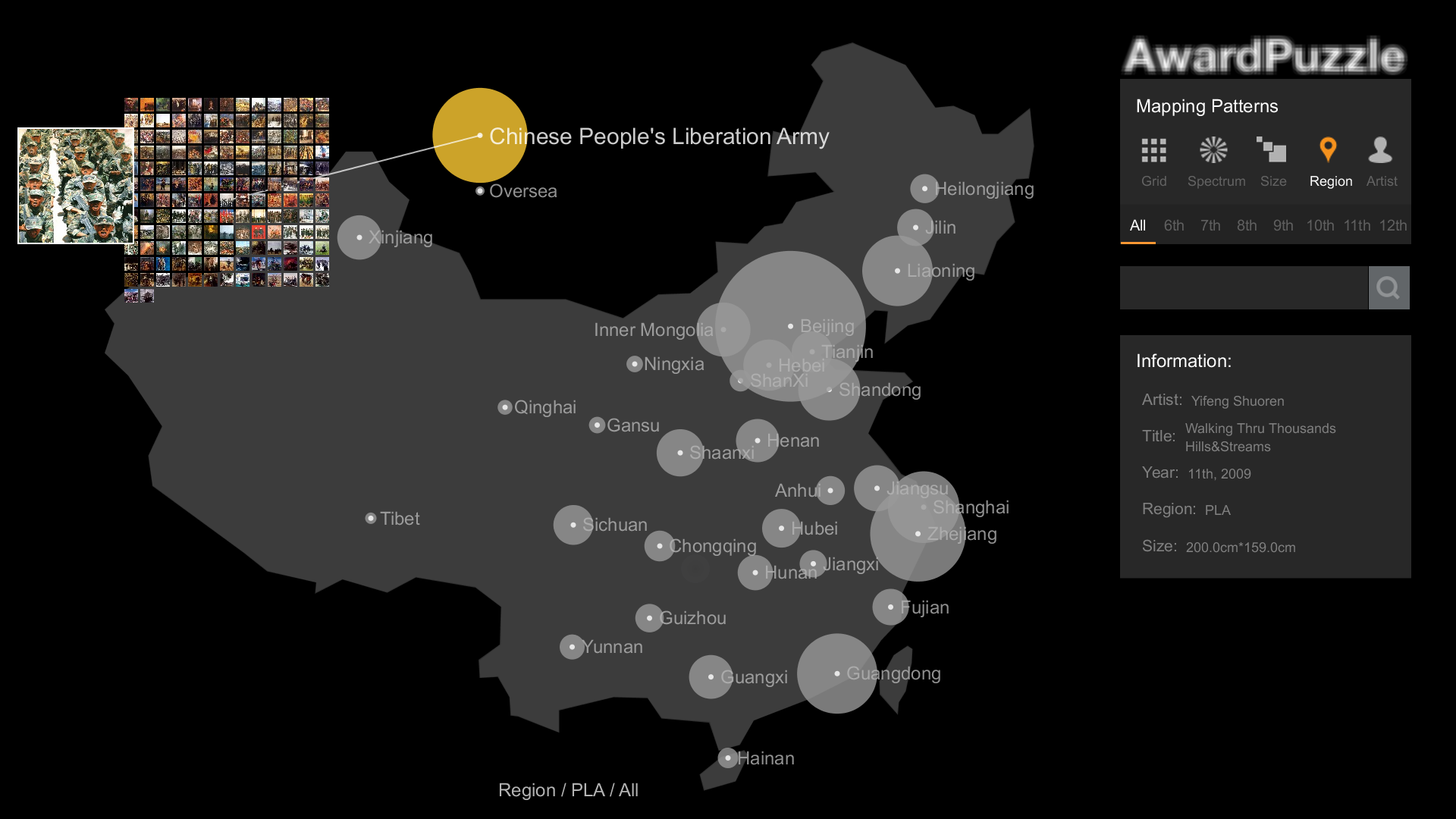
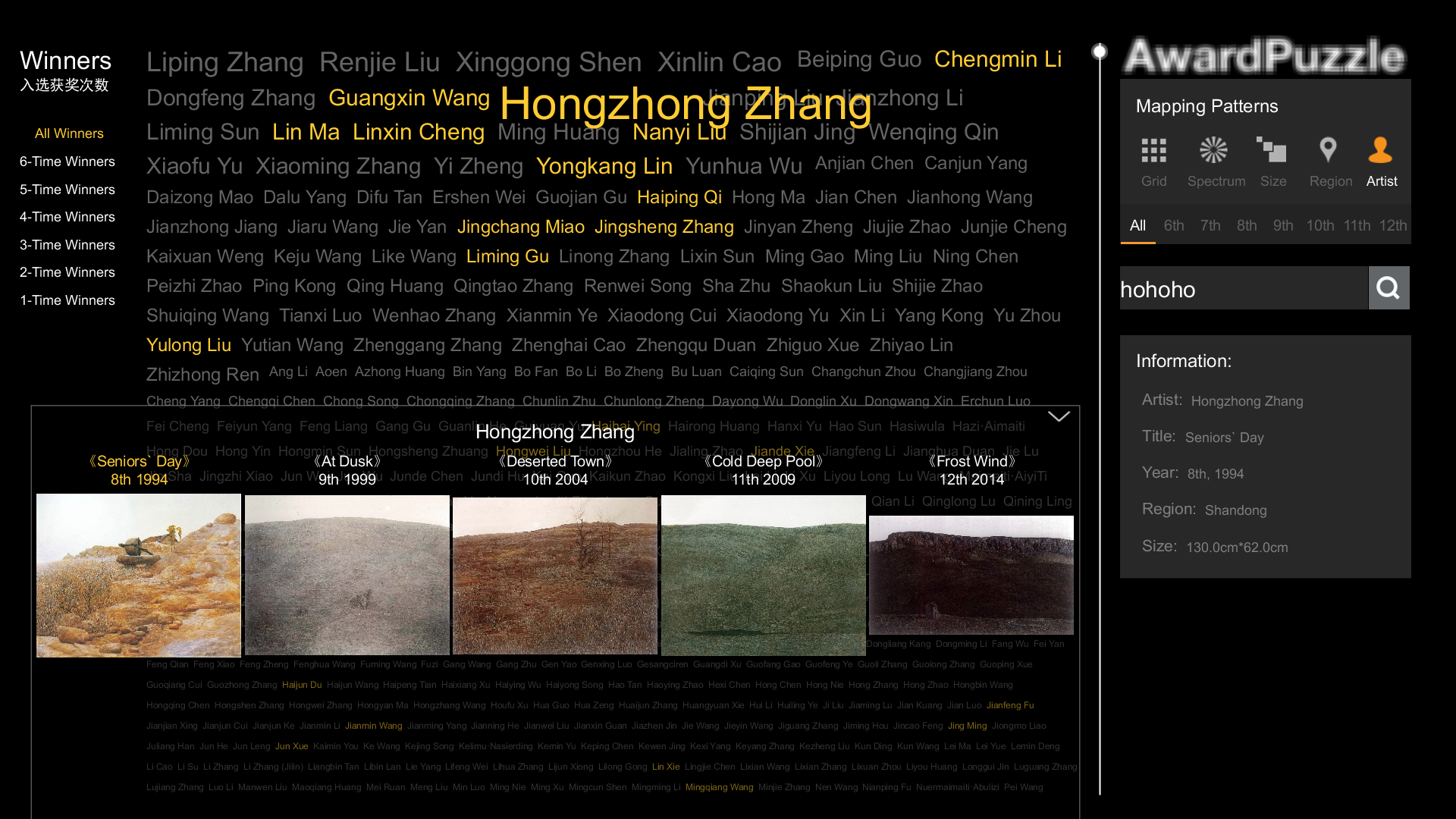
The same archive can be reorganized by time, color, canvas dimensions, geography, and prize-winning artist. Viewers move from the full field to a single painting, filter the collection, and follow visual similarities without losing access to the original images.
Questions generate new views
Development moved through a repeated cycle of question, visualization, and new question. Similar paintings with the same title prompted an artist view; debates about increasingly large canvases prompted a dimensions view; transitions between views revealed further relationships among size, region, and time.
A public research platform
An initial report circulated through WeChat and Weibo before the interactive platform opened in 2016. Public use demonstrated both the value of independent exploration and a practical limitation: loading thousands of images could take too long. The project treats interface performance, user attention, and interpretation as part of visual research.
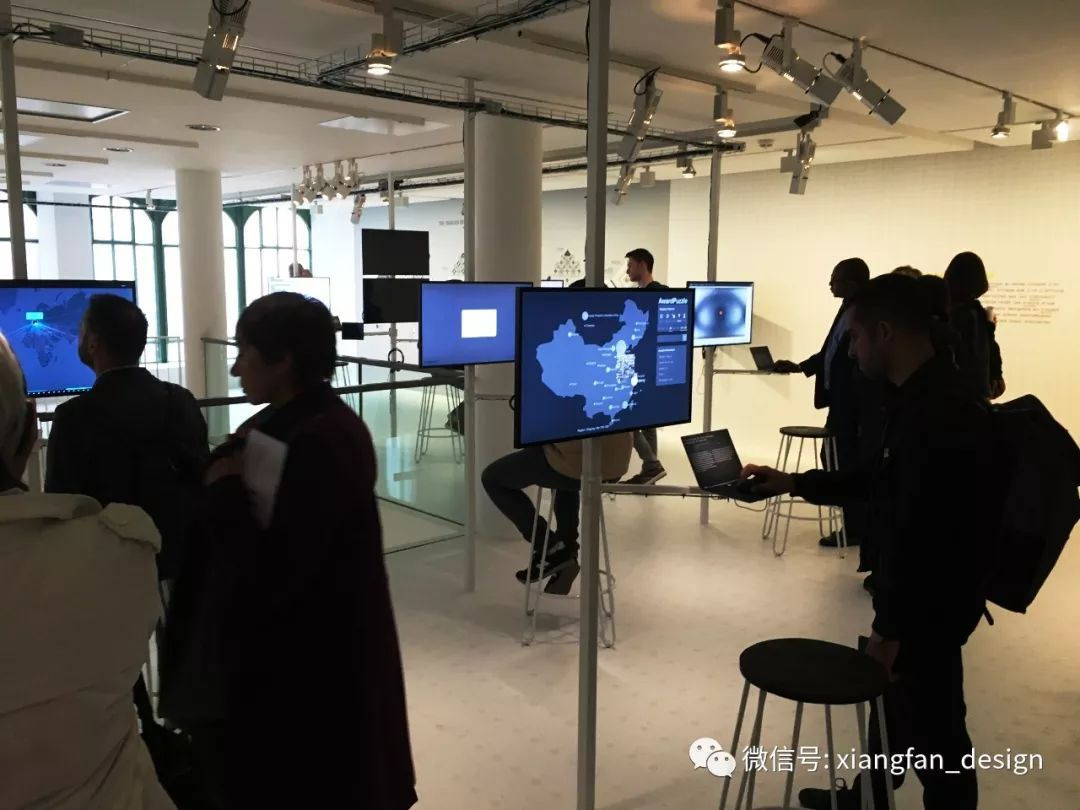
Exhibition
EDF Group Foundation
- Year
- 2018
- Venue
- EDF Group Foundation
- Address
- 6 rue Récamier
75007 Paris 7e, France - Curator
- David Bihanic
Reception & impact
Coverage and scholarly references
Independent records documenting how AwardPuzzle circulated in public discussion and subsequent research.
Media coverage
Artnome · 2018Hacking China’s Most Prestigious Art CompetitionA detailed account of the project’s questions, archive-building process, interface, and findings.
Read article ↗China Science Daily · 2017Data Questions ArtReporter Zhang Jingjing examines AwardPuzzle as a collaboration between visual design, computation, and art research.
Read article ↗Scholarly references
Jin Jiaqin & Xia Cuijuan · 2021The Application Frontier of Digital Humanities in the Field of Visual ArtDiscusses AwardPuzzle as a representative case of image-art analytics in digital humanities.
View journal record ↗Hou Xilong, Wang Xiaoguang & Duan Qingyu · 2022The Investigation and Analysis of Distant Reading Visualization of Cultural Heritage Image ResourcesCites AwardPuzzle in its account of distant reading and visualization as tools for observing and interpreting art collections.
View journal record ↗