- Year
- 2018–20
- Research direction
- Metaphor as Medium →
- Role
- Research project
- Team
- Fan Xiang · Shunshan Zhu · Zhigang Wang · Kevin Maher · Yi Liu · Yilin Zhu · Kaixi Chen · Zhiqiang Liang
- Contributions
- Fan Xiang — cocreator, artist, researcher · Shunshan Zhu — founder, cocreator, technical director · Zhigang Wang — artist, researcher · Kevin Maher — designer · Kaixi Chen — senior software engineer · Yi Liu, Yilin Zhu, Zhiqiang Liang — student researchers
- Source
- China Biographical Database
- Includes
- Installation series · Interactive work · Paper
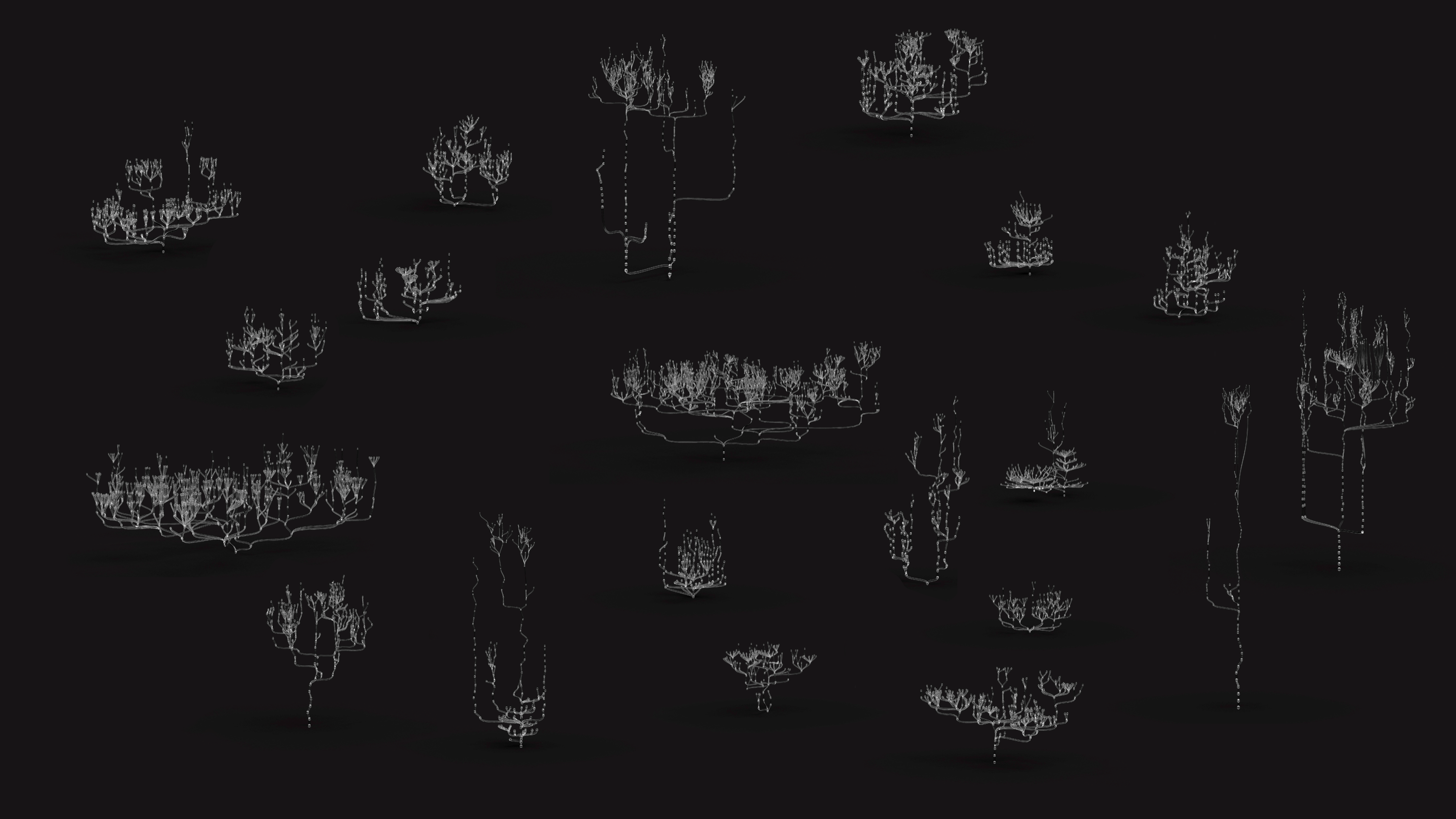
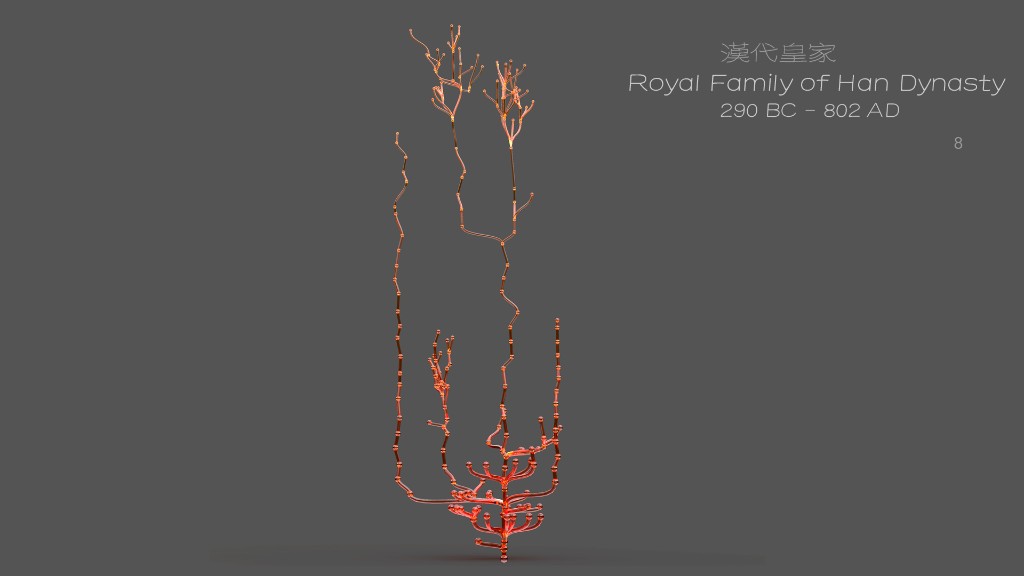
Enhanced Family Tree is an evolving series of visualizations and installations built from ancient Chinese genealogical records. Moving from printed plates and crystal objects to an interactive family forest, the project asks how the familiar metaphor of a tree can reveal both the scale of family history and the uncertainty inside its records.
Original project record
View archived page ↗- Exhibited at IEEE VIS Arts Program, Berlin (2018); XXII Triennale di Milano (2019); the National Museum of China (2019); and Mirror & State, Beijing (2019).
- Enhanced Family Tree received the SIGGRAPH 2020 Art Papers Best Paper Award.
Beginning with a historical database
The research uses the China Biographical Database, which contained records for approximately 427,000 people as of April 2019. Rather than treating this material as a finished account of the past, the team retained its gaps and contradictions so the condition of the archive would remain visible.
When an error becomes a clue
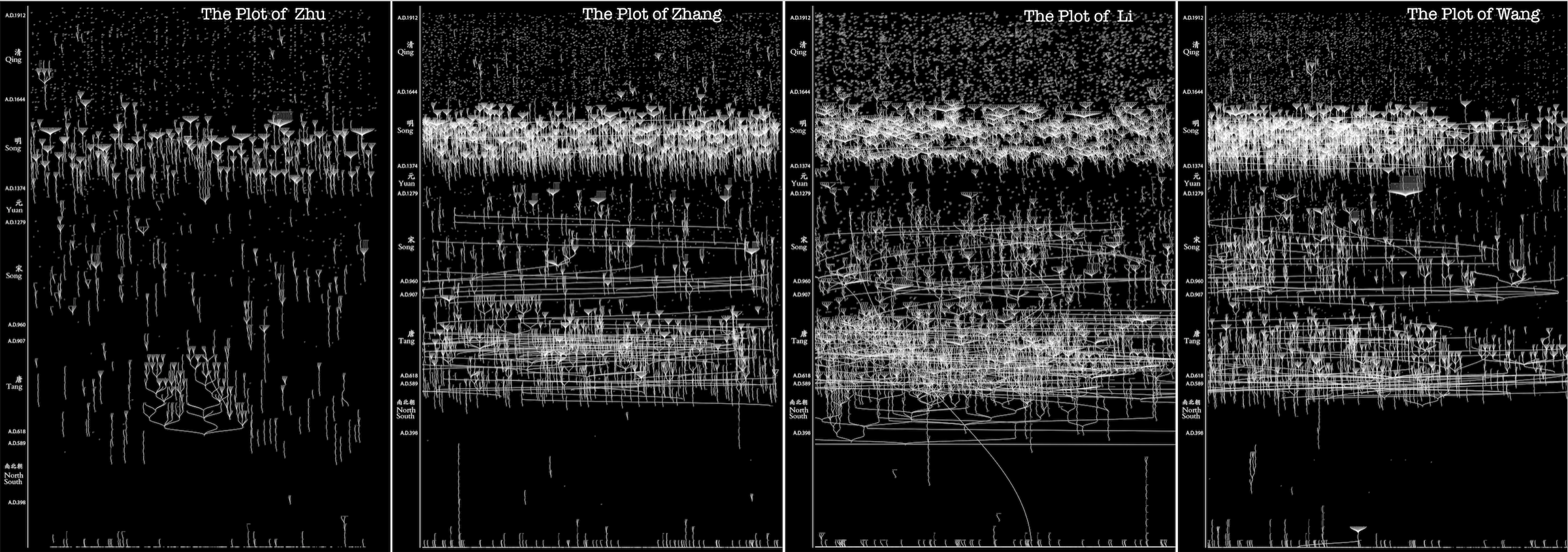
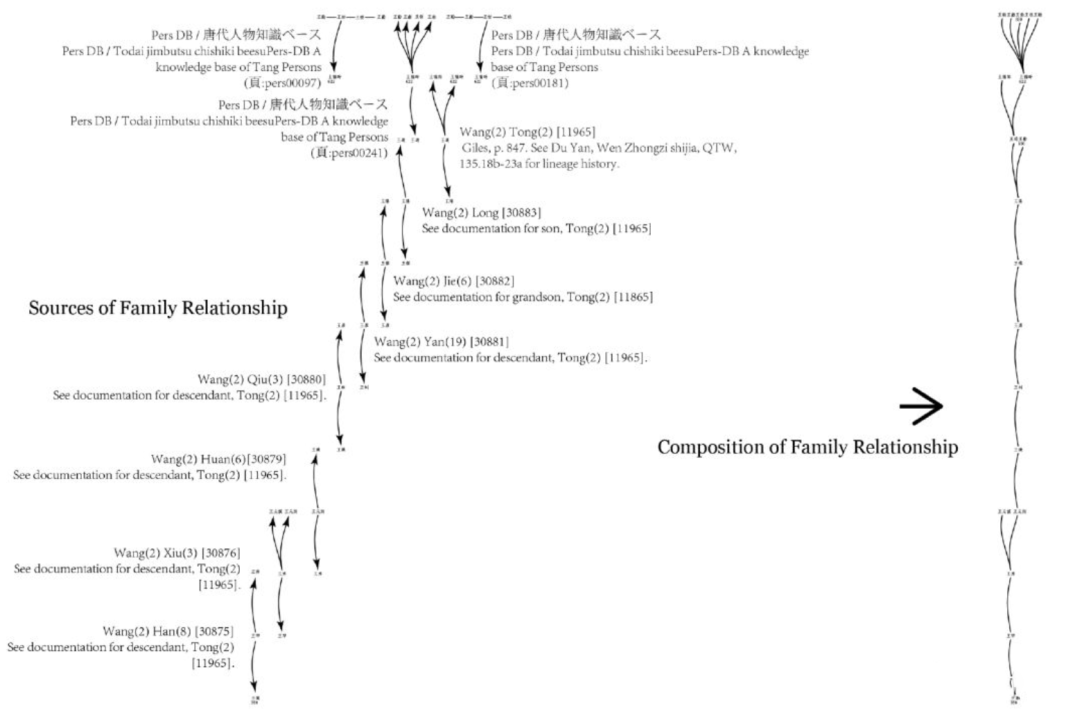
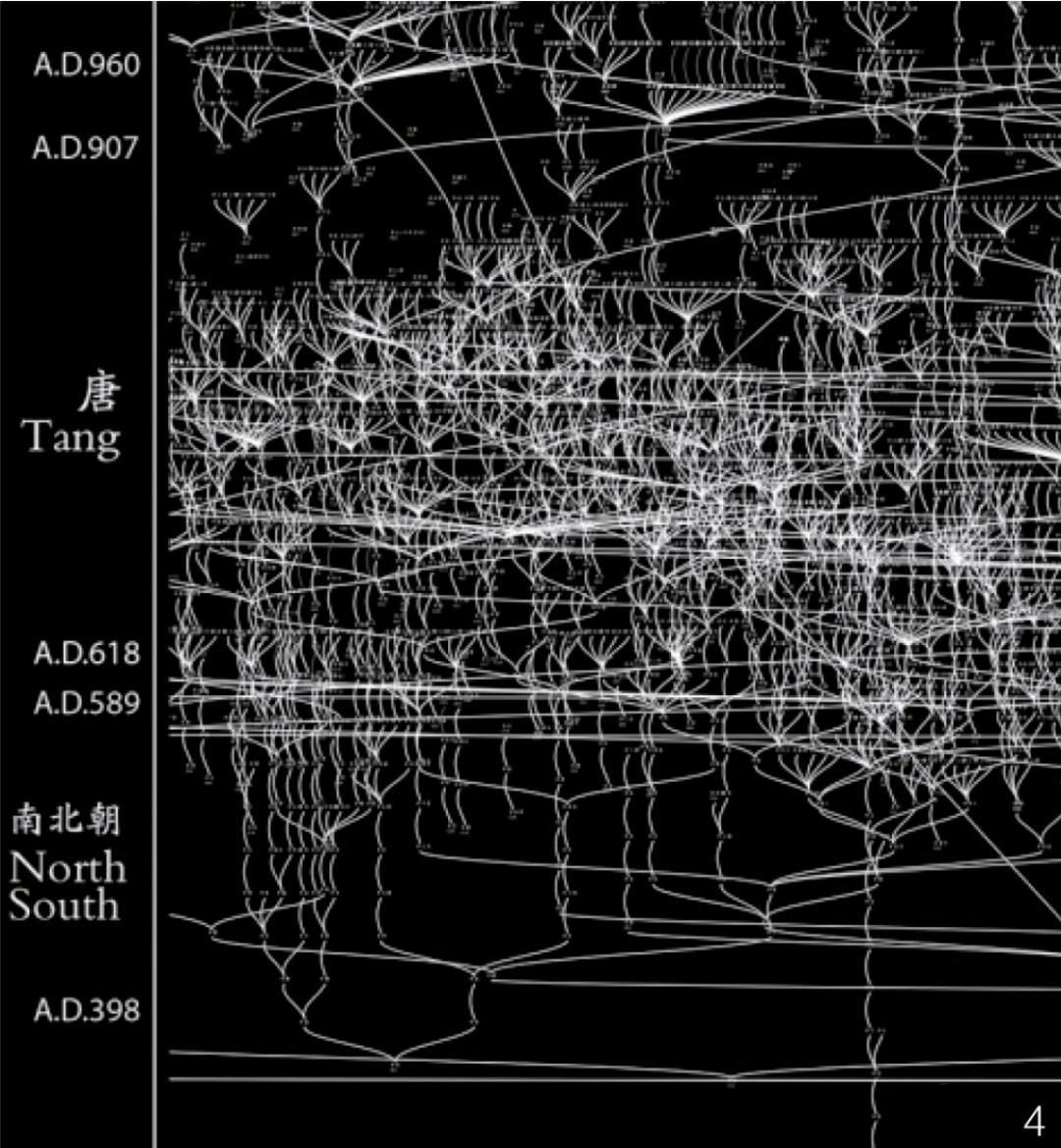
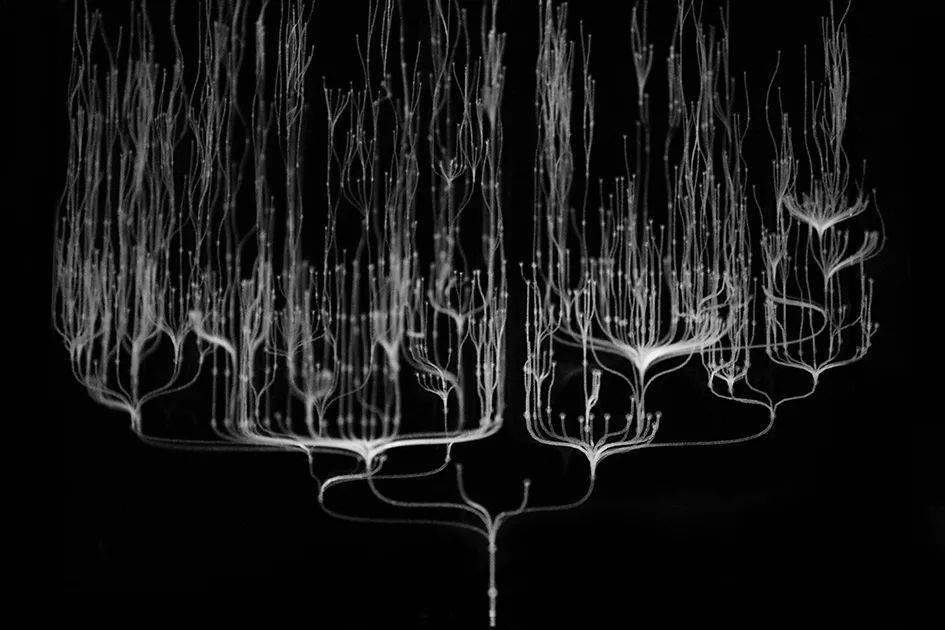
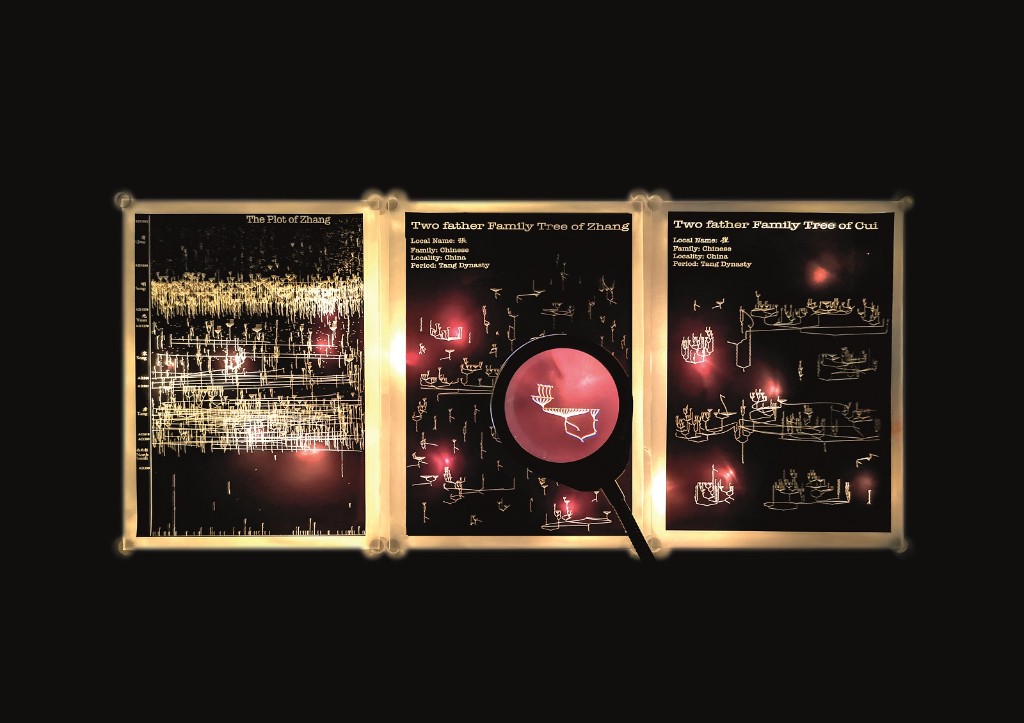
The Reingold–Tilford algorithm arranged people by generation and parent–child relationship. Unexpected long horizontal lines exposed biologically impossible cases in which one child appeared to have multiple fathers. What first looked like a failure of the visualization became a way to locate disputed records and formulate new historical questions.
Returning from the image to the document
The team examined cases such as the Southern Song poet Wang Ruan by comparing the visual anomaly with poetry and historical literature. Visualization did not settle the lineage; it identified where closer documentary research was needed and made previously buried contradictions available for discussion.
Four generations of exhibition
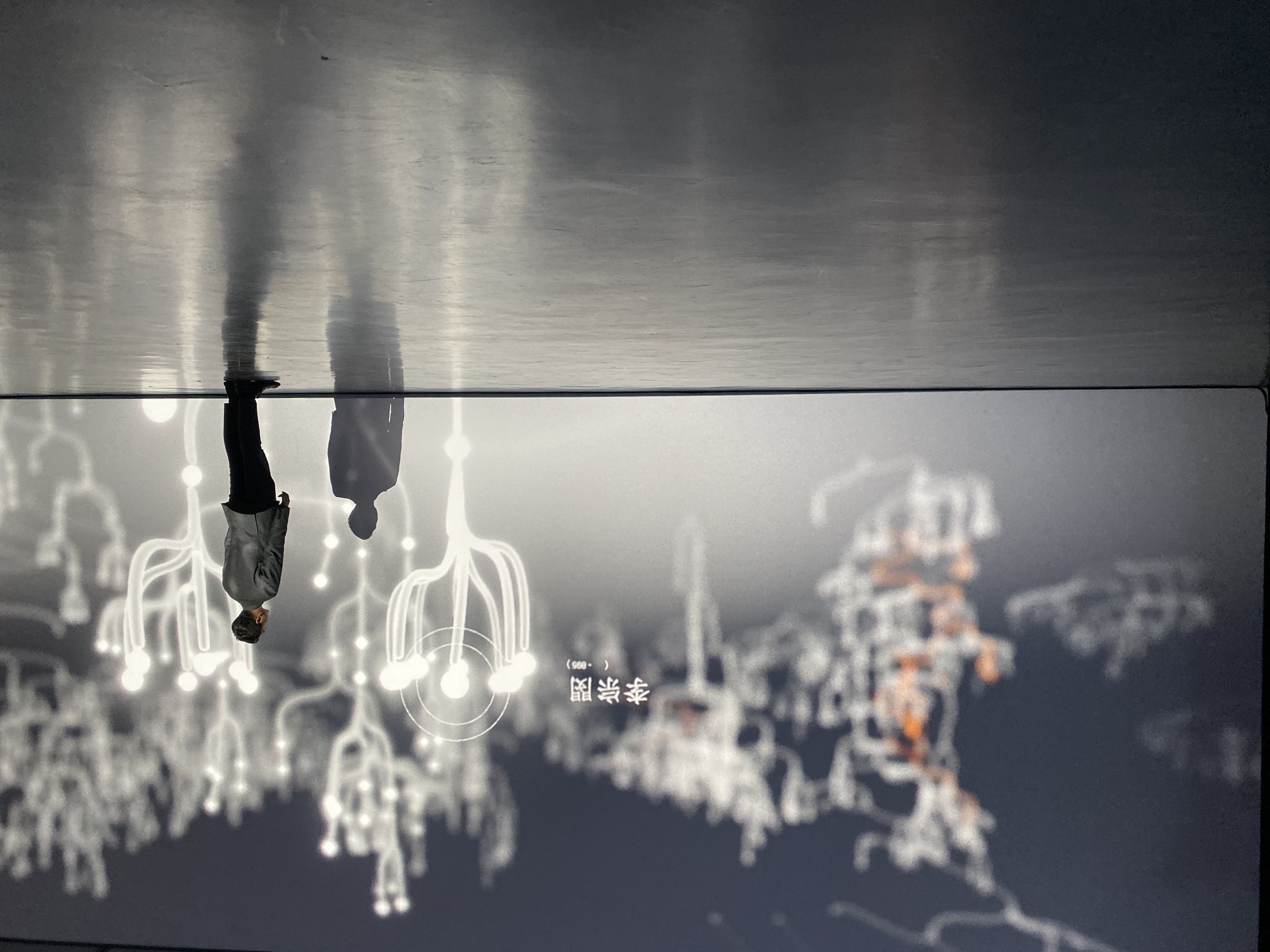
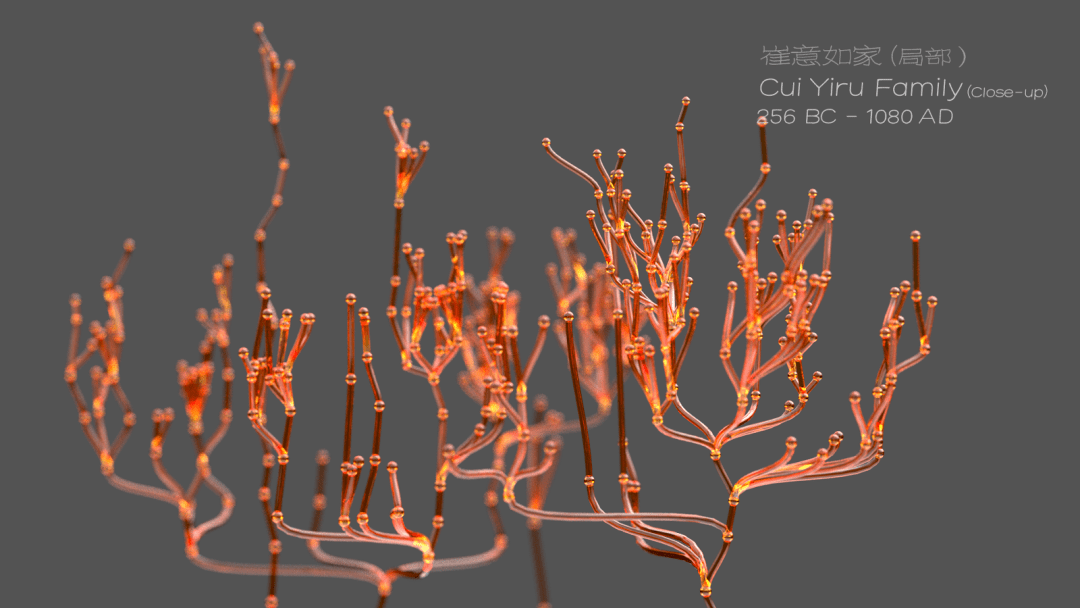
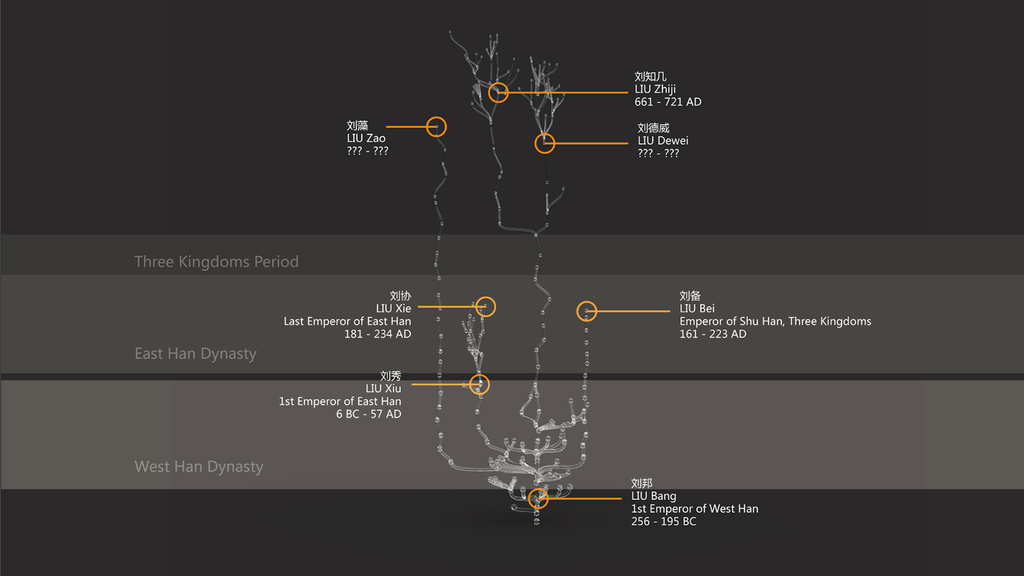
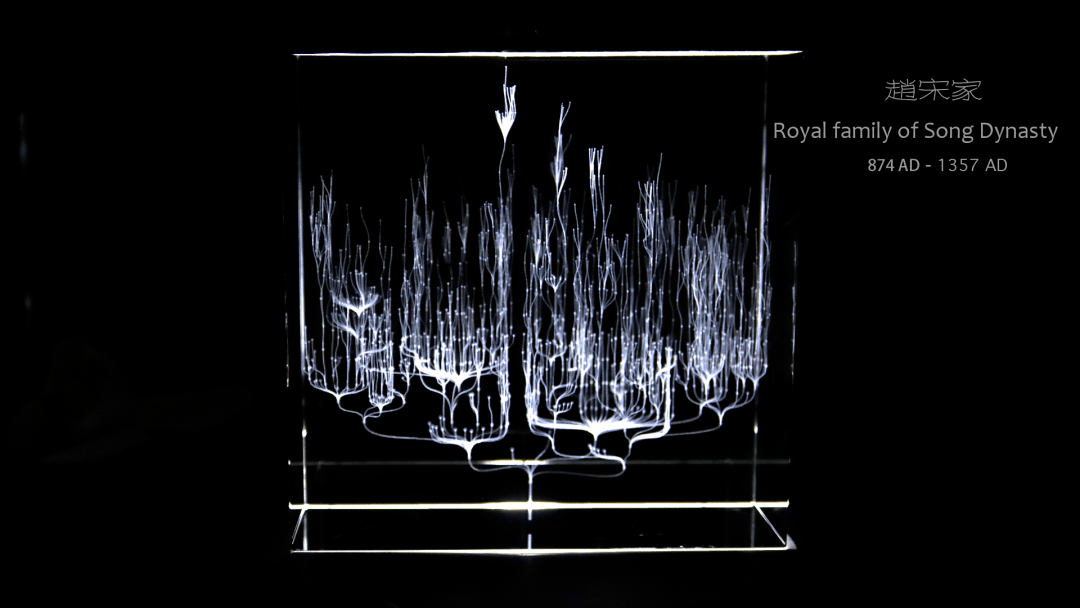
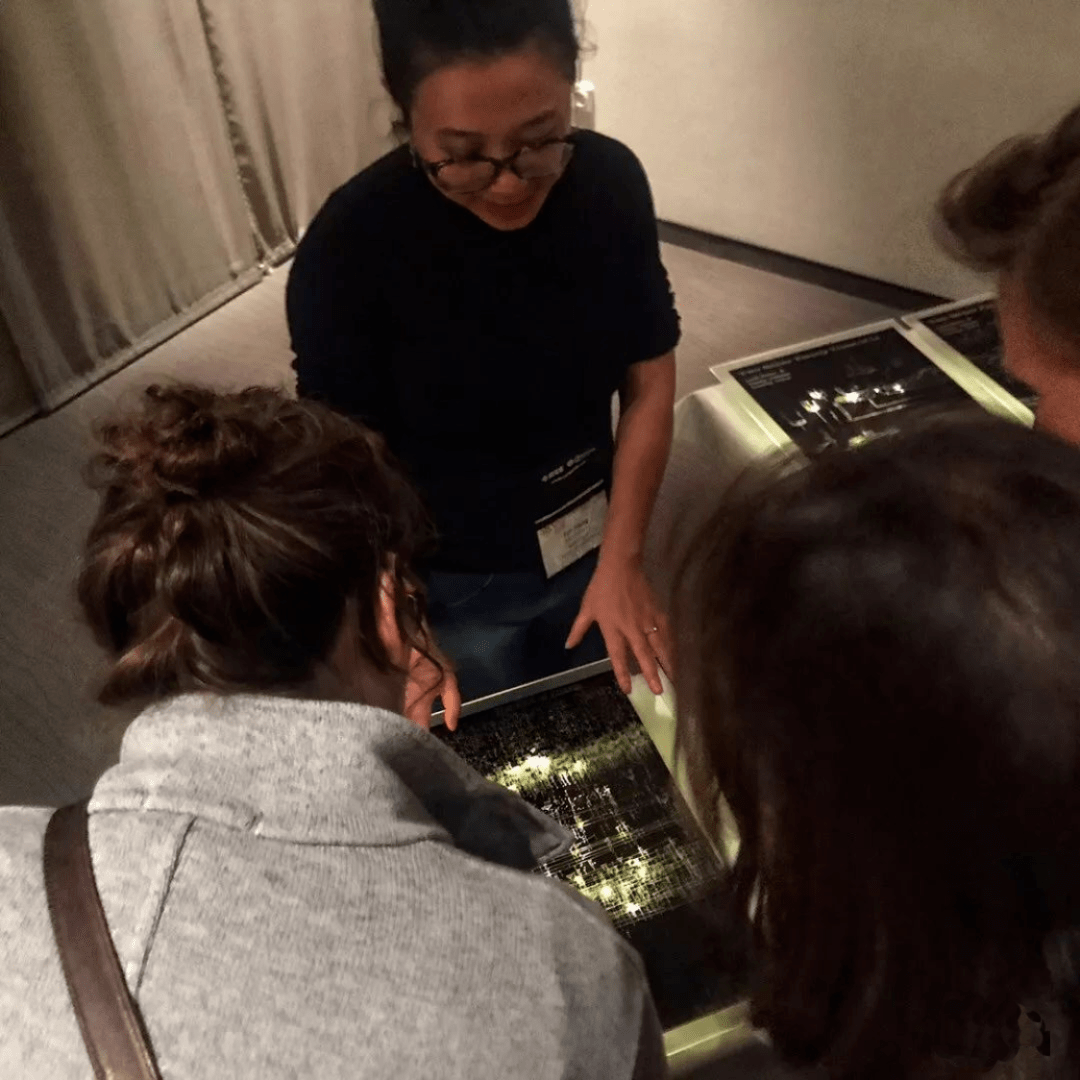
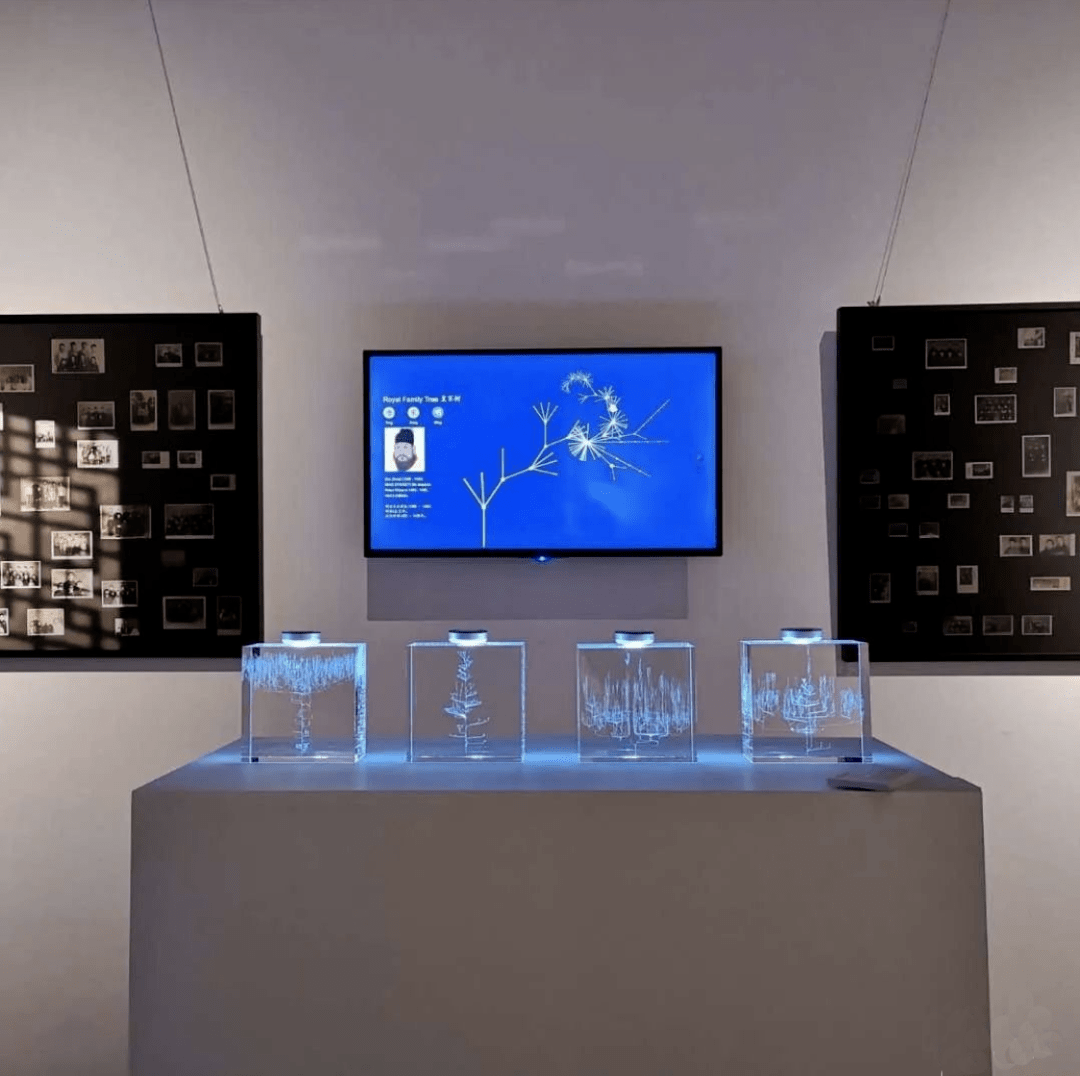
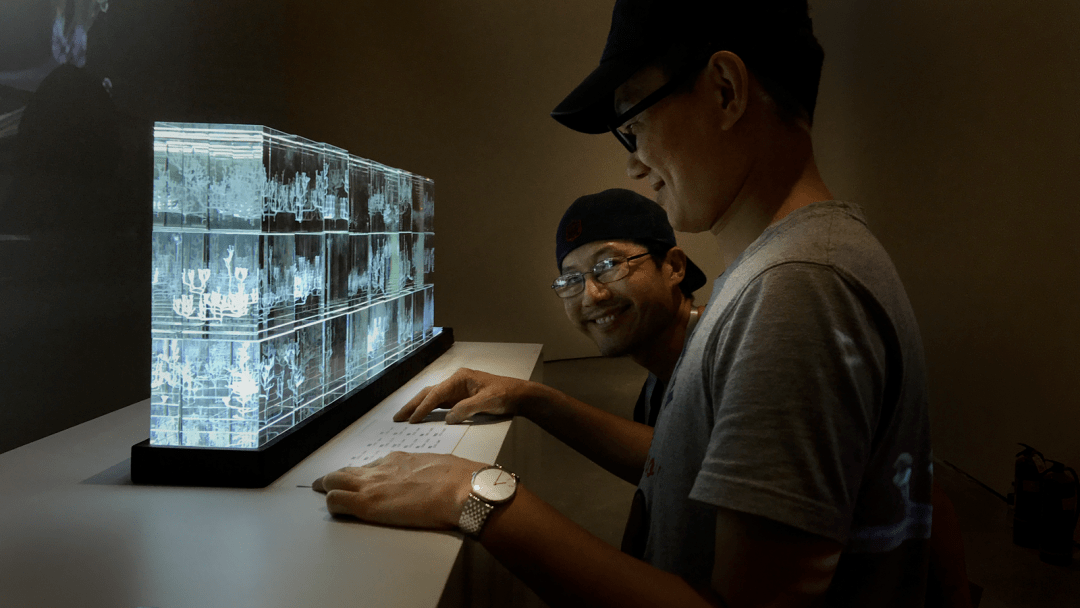
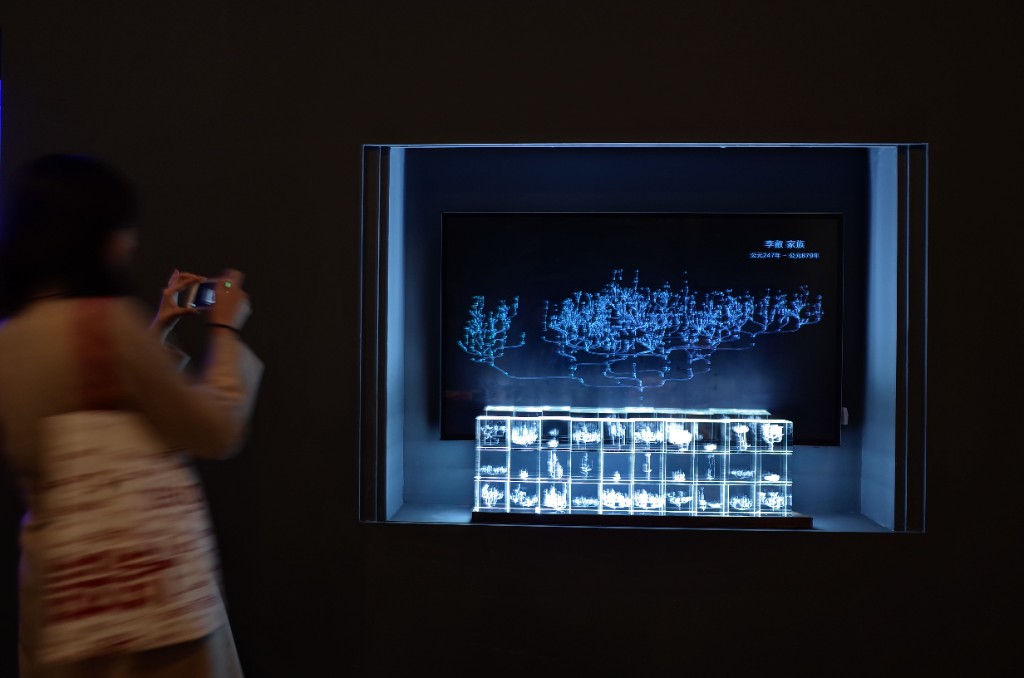
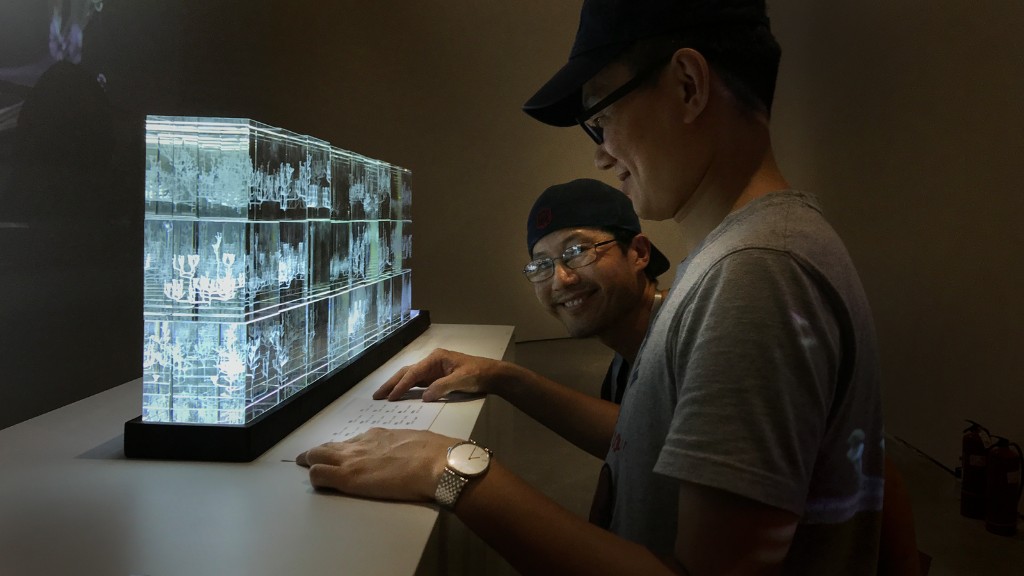
The project evolved through four forms: backlit X-ray-style family trees at IEEE VIS 2018; laser-etched crystal trees for hand-held observation; rendered three-dimensional family forms at the National Museum of China; and a twelve-metre interactive family forest created in Beijing in 2019. Each version changed dimension, material, scale, and the audience’s relationship to the data.
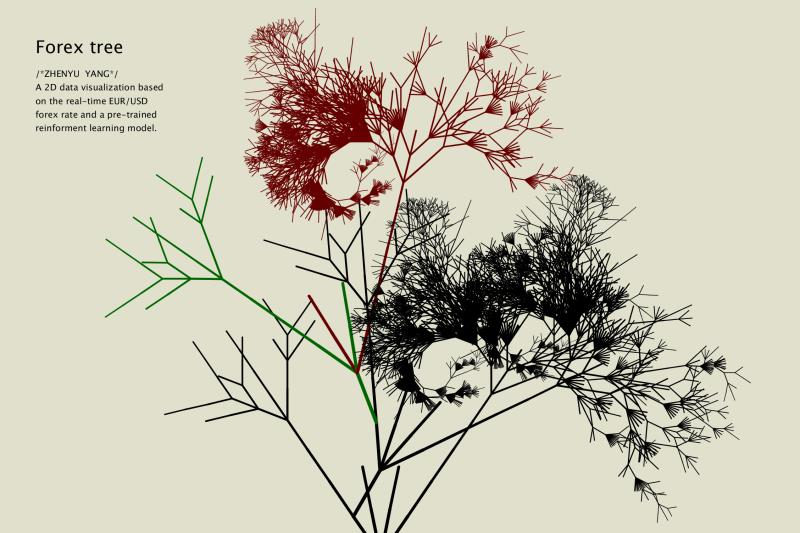
The tree as a visual metaphor
Branches, growth, leaves, and the space of a forest make a large relationship system intuitively approachable without removing its complexity. In the interactive installation, visitors enter a surname, select a historical person, and watch a lineage grow across the projected field.
Questions from the public
Audience responses became part of the research. Historians asked whether the technique could identify disputed relationships; visitors asked whether they could find or add themselves. These questions expanded the project from displaying genealogy toward historical inquiry, public participation, and the ethical limits of future family-tree systems.
Additional images and contextual captions are drawn from a 2020 project report published by the Tsinghua Academy of Arts & Design and republished by Sohu.
Award recognition
SIGGRAPH 2020 Art Papers Best in Show
ACM SIGGRAPH interviewed Fan Xiang after Enhanced Family Tree received the Art Papers program’s Best in Show award.
Recognition
The official SIGGRAPH account identifies Enhanced Family Tree: Evolving Research and Expression as the program’s Best in Show award recipient.