Finding unspoken relationships in data, archives, and the traces of everyday life.
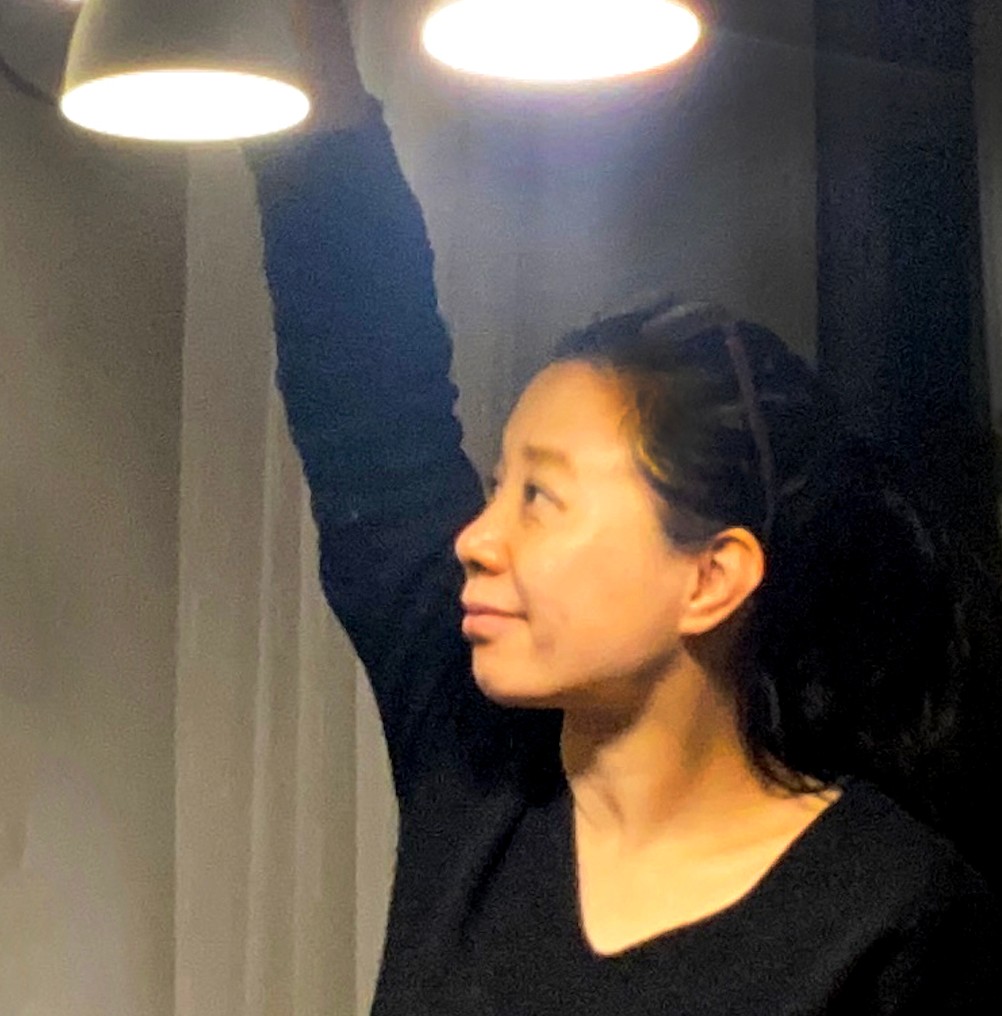
Fan Xiang is a visual designer and researcher, and an Associate Professor at the Academy of Arts & Design, Tsinghua University. Her practice spans digital art, visual communication design, and digital humanities. Working with images, archives, sound, text, and interactive media, she investigates how complex information can become perceptible, interpretable, and understandable.
Download CVPDF · 2026↓Research proposition
Designing the Unsaid
I understand design as a method of inquiry that makes the unsaid perceptible. Data, archives, and everyday traces are never neutral materials; they carry human choices, memories, biases, and omissions. Through collecting, comparing, reorganising, and building interactions, I bring obscured relationships back into view.
Design, here, does not provide a definitive answer to a complex question. It arranges a way of seeing—inviting people to approach the material, notice differences, question what they encounter, and form their own understanding.
Research directions
Entering the scene through archives, approaching experience through data, and using metaphor as a medium for complex stories.
Archives as Living Sites
Rereading images, documents, and cultural archives to enter historical cross-sections and recover overlooked clues and absences.
Representative projects: AwardPuzzle, AI Sophie, Grand Playbill.
Data as Lived Experience
Turning time, quantity, and relationships into inner landscapes in order to understand the human situations, memories, and emotions behind the data.
Representative projects: COVID19 CaseFlow, FaceType.
Metaphor as Medium
Finding simple and precise visual metaphors that make complex relationships visible, felt, and understood.
Representative projects: Enhanced Family Tree, Chinese classical literature colour study, As If There Were.
Method
How the Work Develops
Observing anomalies → Collecting materials → Verifying sources → Comparing relationships → Building forms → Inviting interpretation
Each project takes a different medium, but always begins with the material itself and preserves its uncertainty, provenance, and limits of interpretation.
Selected recognition
2020SIGGRAPH Art Papers Best in Show · Enhanced Family Tree
2018Science Magazine Data Stories Competition Finalist · AwardPuzzle
2016Annual Excellent Paper · Decoration Magazine · AwardPuzzle Research Paper
Selected exhibitions
2025Grand PlaybillXiamen International Art Week · Xiamen
2025Gong Deng (《供灯》)Tsinghua University Art Museum & Times Art Museum · Chengdu
2021FaceType: Expressing Our Spoken ExpressionIEEE VISAP · Online
2019Ancient Chinese Family TreeThe Fifth Art and Science International Exhibition · National Museum of China, Beijing
2019Enhanced Family TreeXXII Triennale di Milano · Milan
2019Traces of TaijiThe Third China Design Exhibition · Shenzhen
2018AwardPuzzleData 1, 2, 3 · EDF Group Foundation, Paris · Curated by David Bihanic
2018Ancient Chinese Family Tree SpecimensIEEE VIS Arts Program · Berlin
Academic experience
2014–presentAssociate ProfessorAcademy of Arts & Design, Tsinghua University · Beijing
2023–25Associate ProfessorSchool of Innovation Design, China Academy of Art · Hangzhou
2023–24AffiliateInstitute for Quantitative Social Science (IQSS), Harvard University · Cambridge, Massachusetts
2018Visiting Associate ProfessorParsons School of Design at The New School · New York
2005–14Associate Professor & Department HeadGuangzhou Academy of Fine Arts · Guangzhou
2003–04ResearcherTama Art University · Tokyo · Pictogram and safety-wayfinding research with Prof. Yukio Ota
Contact & academic links