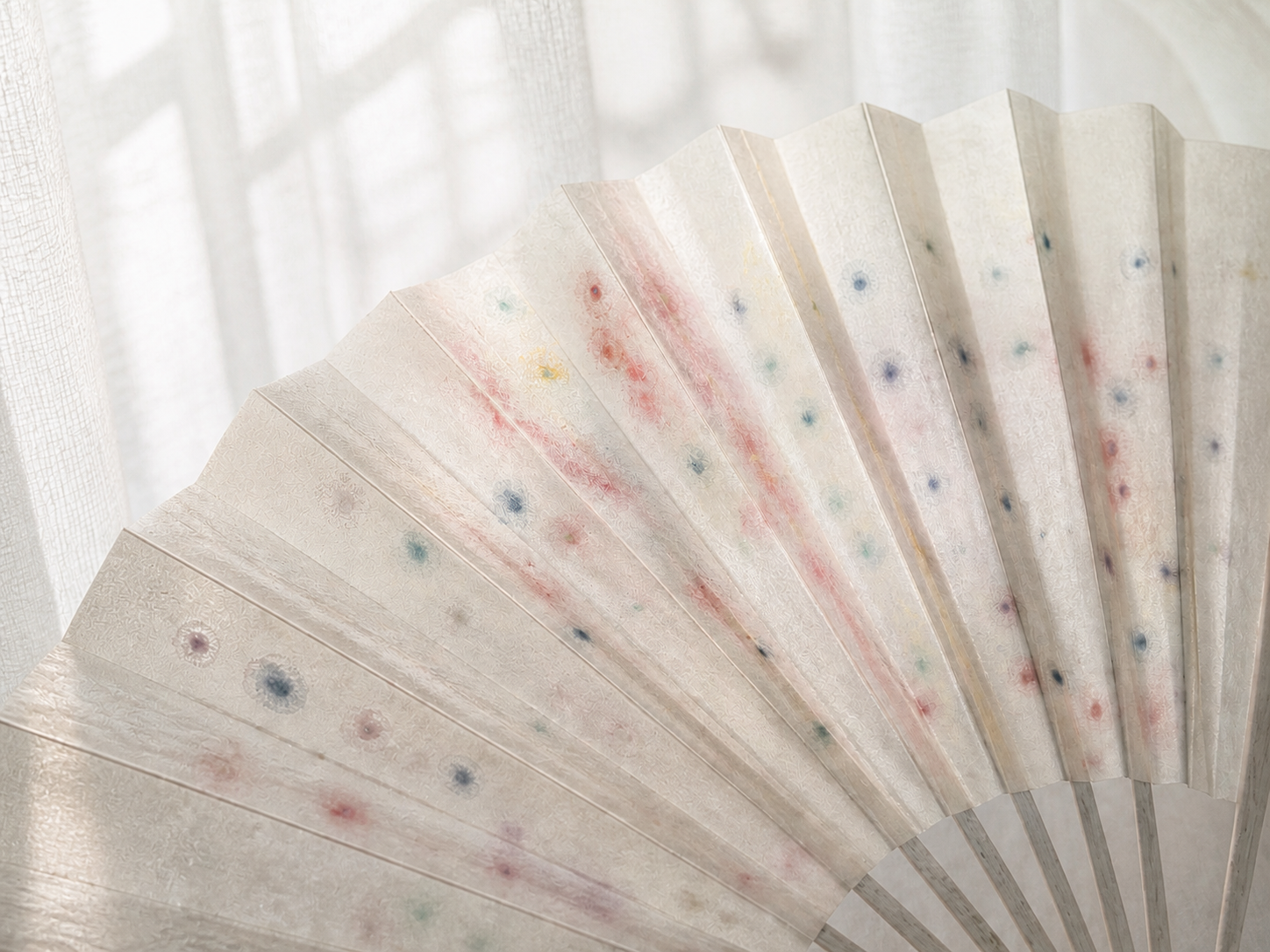
《十八春》

《十八春》

Year
2016
Research direction
Metaphor as Medium
Role
Research experiment · Visualization
Team
Fan Xiang
Source
Eileen Chang’s novel Eighteen Springs
Includes
Literary visualization · Printed fan · Physical model · PDF

A literary-visualization experiment that reorganizes the color records in Eileen Chang’s novel Eighteen Springs across its eighteen chapters, then translates their distribution into a folded paper fan.

Literary visualizationPrinted fanPhysical modelPDF
01

Reading beyond the plot

The project approaches the novel through its color language. Color records are extracted and reorganized by chapter, making recurrence, density, and change available for comparison alongside a conventional reading of the story.

02

Keeping the chapter sequence visible

The visualization retains the novel’s eighteen-part structure. Each color mark represents one record, while the folded fan turns the chapter sequence into a surface that can be viewed as a whole.
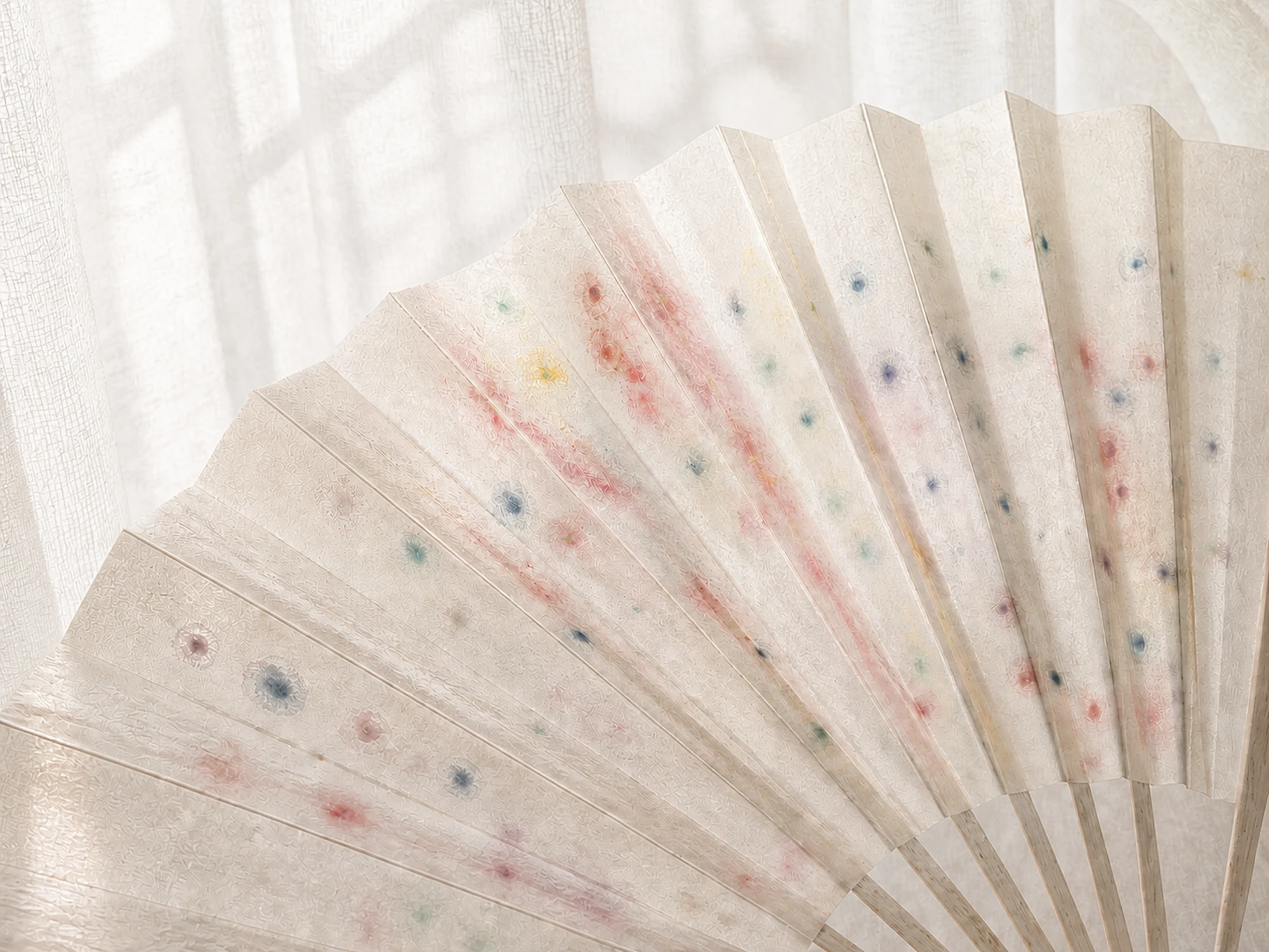
Color records from Eighteen Springs arranged across eighteen fan-shaped chapters
Eighteen Springs Visualization: Color records distributed across the novel’s eighteen chapters.
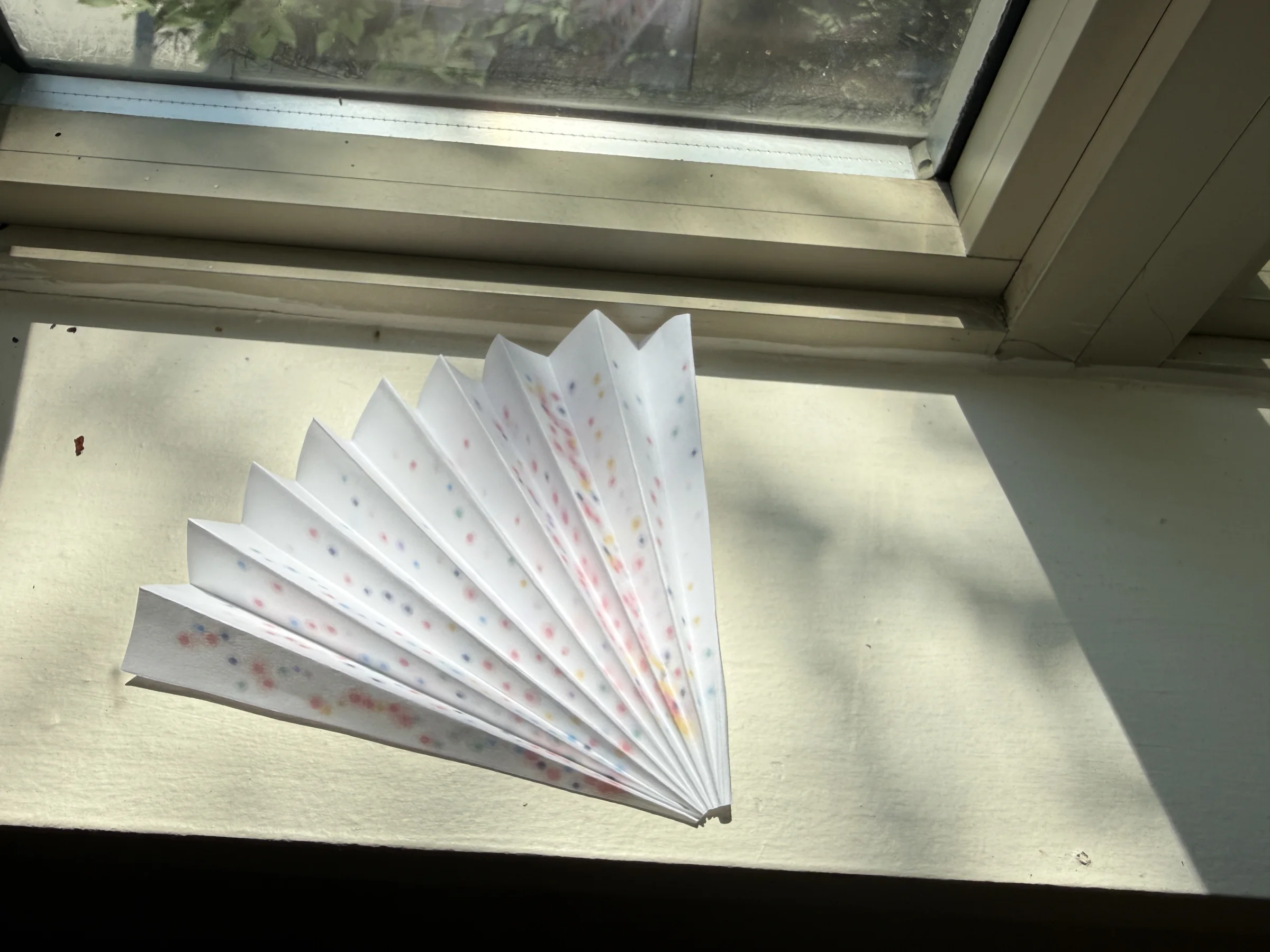
Eighteen Springs paper fan viewed in daylight
Paper model: Color traces unfolding across successive chapters.
Complete visualizationView the eighteen-chapter color fan PDF
18chapters mapped
Color recordsunit of observation
Folded fanphysical form
03

From text to color records

Rather than reducing the novel to a single palette, the study preserves individual color records and their place within the chapter structure. Their accumulation forms a visual index of how color moves through the book.

04

From sequence to folded surface

The eighteen chapters become eighteen divisions in a fan-shaped composition. The format holds onto sequence while allowing distant comparison: viewers can scan the entire work, then return to particular chapters and color traces.

05

A visualization made physical

The diagram was printed and folded into a paper model. As an object, it can be opened, compressed, and viewed from different angles, turning an abstract literary dataset into a spatial reading experience.

06

The limits of distant reading

Distribution reveals patterns, not literary meaning by itself. The visualization is therefore an invitation to move between overview and close reading, using the image to formulate questions that must ultimately return to the text.

Next projectAwardPuzzle